
Gutters Still Overflowing After Cleaning? 7 Problems to Check

Your gutters were cleaned recently. Then the first solid Port Macquarie downpour arrives and water still pours over the edge. It is frustrating, but it also tells you something useful: the problem may not be the leaves you can see from the ground.
Overflowing gutters can send water down walls, over garden beds and towards the foundations of your home. Around Port Macquarie, Lake Cathie and Wauchope, heavy rain can expose a restriction or drainage problem very quickly. Here are seven common causes worth checking before the next wet spell.
1. The downpipe is still blocked
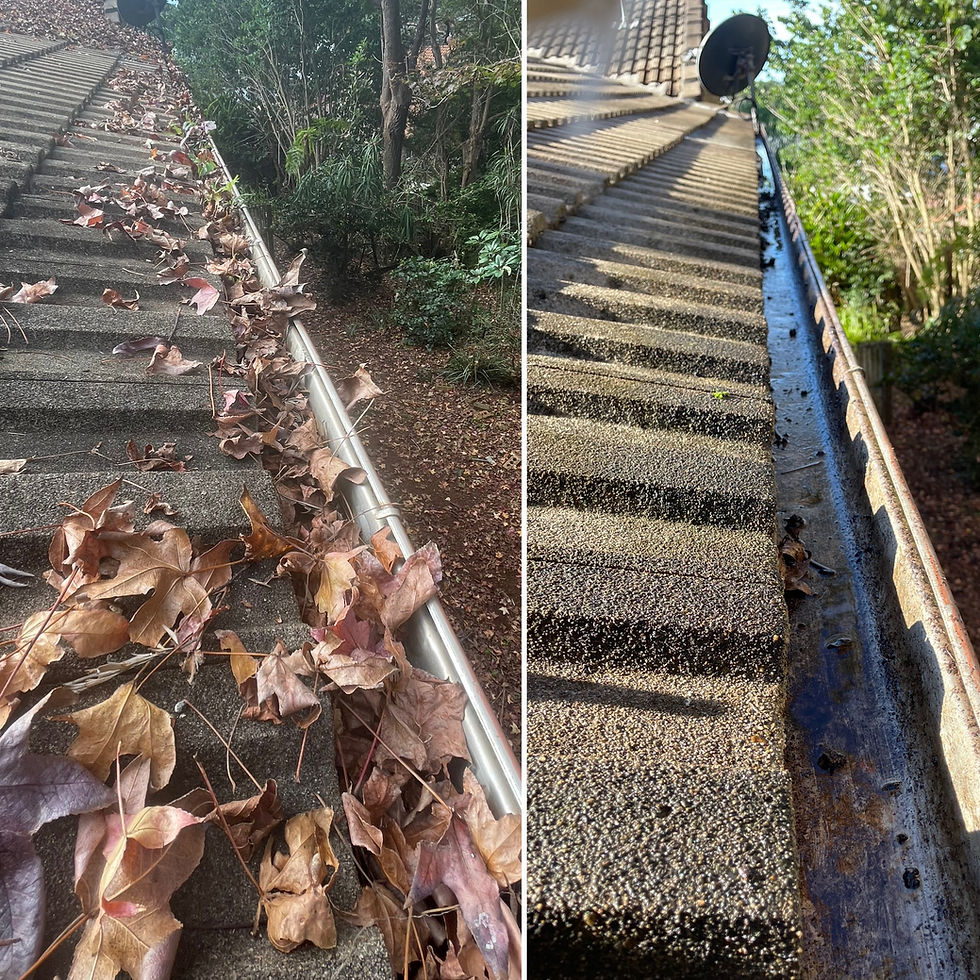
A gutter can look spotless while the downpipe below it is holding a compacted plug of leaves, mud or roof grit. Water reaches the outlet, cannot move away quickly enough and backs up until it spills over the gutter edge.
This is one reason a proper gutter clean should not finish when the visible debris is gone. The gutters and downpipes need to be flushed so the water flow can be checked. If the blockage sits deeper in the stormwater system, that may need separate investigation.
2. Debris is sitting in roof valleys
Leaves and small branches often collect in roof valleys, especially on homes near established trees. During rain, that material can wash straight back into a freshly cleaned gutter and restrict the outlet again.
Portside’s manual gutter-cleaning process includes removing loose debris from the roof as well as the gutters. Clearing those collection points helps the clean last longer and reduces the chance of the next storm shifting the same material into your drainage system.
3. The gutters do not have enough fall
Gutters are installed with a slight fall towards their outlets. If a section has sagged, shifted or was installed too flat, water can sit in a low point instead of moving towards the downpipe. Once that section fills, it may overflow even though it contains very little debris.
Pooling water after a dry day is a useful warning sign. Cleaning will remove the muck, but it cannot correct the gutter’s position. A licensed trade may need to assess whether adjustment or repair is required.
4. There are too few outlets for the roof area
Large or complex roof sections can deliver a lot of water into one gutter run. In intense Mid North Coast rain, a single outlet may struggle to drain that volume fast enough. Water then rises faster than it can escape.
If overflow happens only during very heavy rain, and always in the same place, the roof catchment and outlet capacity may be part of the problem. That is different from a basic clean and should be assessed before changes are made.
5. The gutter is damaged or pulling away
Loose brackets, bent sections and damaged joins can interrupt the intended flow. Water may collect behind a distorted edge or escape through a failed joint before it reaches the downpipe.
From the ground, the first sign may be a wet fascia, staining below a join or a gutter line that no longer looks straight. These issues are easier to spot during a thorough clean because the debris is removed and the system can be flushed.
6. The gutter guard is blocked on top
Gutter guard can reduce the amount of larger debris entering the gutter, but it does not make the roofline maintenance-free. Fine leaves, seed pods and organic matter can build up on the mesh or settle underneath it. Water may then travel over the debris instead of through the guard.
The right maintenance approach depends on the guard system, the roof type and nearby trees. If you are considering a new gutter-guard installation, it is worth choosing a system suited to the property rather than treating every home the same.
7. The rain is exposing a bigger drainage issue
Sometimes the gutter and downpipe are clear, but water still has nowhere to go. A blocked underground stormwater line, a disconnected pipe or an inadequate drainage layout can cause water to back up through the system.
This is especially likely when several downpipes are slow at once, water rises from a drain or overflow continues after the roof rain has eased. The next step may be a plumber or drainage specialist rather than another gutter clean.
What a thorough gutter clean should include
For Portside Roof & Gutter, cleaning is a hands-on process. Loose material is manually removed from the roof, valleys and gutters. The gutter runs and downpipes are then flushed so the flow can be checked and obvious restrictions can be identified.
That approach matters because a tidy-looking gutter is only part of the job. The real test is whether rainwater can move through the system as intended.
A quick note about roof cleaning
Roof cleaning and gutter cleaning are separate services. Portside does not pressure-wash roofs. Where roof cleaning is suitable, soft-washing methods are used instead. Pressure washing is reserved for appropriate exterior surfaces such as driveways and walls—not roof tiles or roof sheeting.
When should you book a gutter check?
Do not wait for water to pour over the side if you have already noticed plants growing in the gutter, birds pulling at debris, staining on the fascia or water pooling near the home. It is also sensible to check the system before the wetter part of the year, after strong winds, or when nearby trees have dropped heavily.
If your gutters are overflowing in Port Macquarie, Lake Cathie, Wauchope or elsewhere on the Mid North Coast, Portside Roof & Gutter can inspect the accessible roofline, manually remove debris and flush the gutters and downpipes. Get in touch to arrange a quote and find out what is actually stopping the water from moving.


Comments